Démarches artistiques et préoccupations écologiques
L'écoute dans l'écologie sonore - Par Antoine Freychet

Partizaning (v): public art practices which strategically challenge, shape, and reinvent urban and social realities.
Partizaning is a movement, a collective, and a website. It documents examples of art-based activism, interventions, and urban replanning from around the world. It believes that increasingly shared sociopolitical realities and dissatisfaction can be strategically addressed using art-based ‘partizaning’ tactics.
The aim is to explore the role of art as a practical tool for inclusive city regeneration and social activism. It evolves out of the cultural, political and social crisis facing contemporary Russia. It provides documentation and analysis of the role of art in reshaping public spaces, cities and human interactions – globally.
The website in Russian was launched in November 2011. Apart from running the website, it collectively organizes projects, events, and publish an occassional bulletin. On March 4, 2012 – the day of the Russian Presidential Election – it launched the international, English language edition of the site.
Partizaning has 4 members :
Igor Ponosov (1980) : Artist, Curator, Writer, Programmer and Hacker
Shriya Malhotra (1983) : Graduate of The New School (NYC), Cities and Social Justice, Artist, Researcher, Interventionist
Anton Polsky / MAKE (1982) : Graduate of Russia’s State Humanitarian University, Department of History of Art, Artist, Activist and Designer
Dmytro Zaiets (1985) : M.A. in Sociology at Lancaster University (UK, 2011), Ph.D in Sociology at V. Karazin Kharkiv National University (Ukraine, 2014). Independed cultural sociologist
L'écoute dans l'écologie sonore - Par Antoine Freychet
Créé par Justine Berthillot et Mosi Espinoza, On ne fait pas de pacte avec les bêtes est une œuvre scénique…
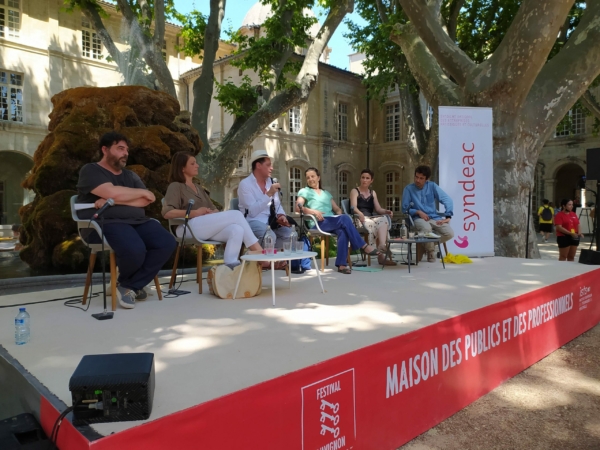
Retrouvez le Grand Débat organisé par Syndeac lors du festival d'Avignon 2022 sur la mise en oeuvre de la transition…